
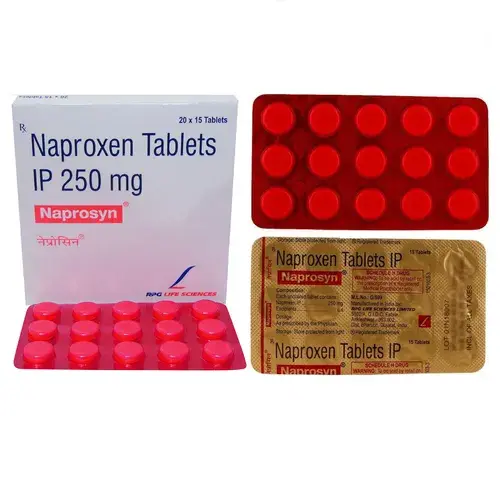
Naprosyn 250 Mg Tablet
Last Updated: August 18, 2026
| Product Name | Naprosyn |
| Active Ingredient | Naproxen |
| Effect | Relief of periarthritis of the shoulder, gout, analgesia, etc. |
| Strength | 250mg |
| Delivery Time | 7~14 days |
| Target Gender | Unisex |
| Manufacturer | RPG Life Sciences Ltd |
| Pack Size | Price | Qty | |
|---|---|---|---|
| 30 Tablets | $15.00 | ||
| 150 Tablets | $70.00 | ||
| 300 Tablets | $130.00 |
 Medically Reviewed by Dr. David Harrilla

Dr. David Harrilla
Drug Safety Expert & Specialist in Generic Medicine
View more »
Niamh Stovall
Senior Medical Content Writer
10+ Years Health Journalism
Product details of Naprosyn 250 mg
Naprosyn 250mg is characterized by its quick pain-relieving effect and few side effects.
It soothes inflammation, removes swelling and fever, and relieves pain. By suppressing the synthesis of prostaglandins from arachidonic acid, it exerts an analgesic and antipyretic effect.
It is used for shoulder pain, pain from joint pain, rheumatoid arthritis pain, post-traumatic pain, post-dental pain, tendonitis, herpes zoster, etc., so it is inconvenient for daily life due to pain caused by various causes. Recommended for those who are feeling the pain.
Effect of Naprosyn 250 mg
It is effective in relieving pain caused by stiff shoulders, joint pain, muscle pain, trauma, rheumatism, and herpes zoster.
It is also used as a pain reliever for menstrual pain, and its effect is relatively quick.
According to the package insert of the original Nyquisan, the peak plasma concentration was reported to be 2 to 4 hours later, and the half-life in blood was about 14 hours.
Active Ingredient of Naprosyn 250 mg
This drug contains naproxen as an active ingredient. Naproxen works by suppressing the biosynthesis of prostaglandins to remove inflammation, swelling and fever, and to relieve pain.
How to Take Naprosyn 250 mg
In general, for adults, take 300 to 600 mg of naproxen in 2 to 3 divided doses. When taking, please take with water or lukewarm water.
When taking, avoid fasting as much as possible. The occurrence of gastrointestinal side effects can be suppressed.
If you take this medicine only when you have a pain, take 1 tablet or more of this drug, and for gout attacks, take 400 to 600 mg orally.
The dose may be adjusted according to your age and symptoms, so please consult your doctor or pharmacist.
For long-term administration, perform blood tests on a regular basis, and if any abnormalities are observed, reduce the dose or stop the drug.
When administering to chronic diseases such as rheumatism, it is recommended to consider treatment methods other than this drug.
Side Effects of Naprosyn 250 mg
The most commonly reported adverse reactions include gastrointestinal disorders, abdominal pain and stomach pain, nausea, vomiting, loss of appetite and other gastrointestinal symptoms, as well as rash and edema.
If you notice any abnormalities, stop taking the medicine and consult a medical institution.
Precautions of Naprosyn 250 mg
- People with blood disorders.
- People with liver disease.
- People with kidney disease.
- People with heart disease.
- People with high blood pressure.
- Bronchial asthma.
- People with ulcerative colitis.
- People with Crohn’s disease.
How to Store Naprosyn 250 mg
- Store at room temperature.
- It does not need to be stored in the refrigerator.
- Store in a cool and dark place away from direct sunlight.
- Keep out of reach of children and the elderly.
- Store out of direct sunlight.
- Please do not take the expired one.
Frequently Asked Questions
Q. What is Naprosyn 250mg?
Naprosyn 250mg is a pain-relief and anti-inflammatory medicine. It contains naproxen, which helps reduce pain, swelling, and stiffness.
Q. What is Naprosyn 250mg used for?
It is commonly used for joint pain, arthritis, muscle pain, back pain, menstrual pain, dental pain, and inflammation.
Q. How does Naprosyn 250mg work?
Naprosyn blocks substances called prostaglandins that cause pain, inflammation, and fever in the body.
Q. How should I take Naprosyn 250mg?
Take it after food with water, exactly as prescribed by your doctor. Do not crush or chew the tablet.
Q. How fast does Naprosyn 250mg start working?
Pain relief usually begins within 1 hour after taking the tablet.
Q. Is Naprosyn safe during pregnancy?
Naprosyn is not recommended during pregnancy, especially in the later stages, unless advised by a doctor.
Only logged in customers who have purchased this product may leave a review.
Reviews
There are no reviews yet.